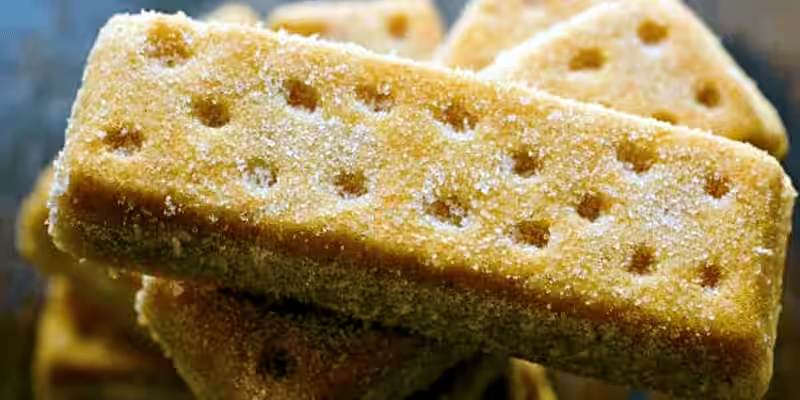
Shortbread and a recipe for shortbread should be simple, but getting that perfect crumbly, buttery texture can be surprisingly tricky. This guide breaks down everything from the sacred 3-2-1 ratio to choosing the right ingredients, whether you’re in Bristol or Boston.
3:2:1 – The Golden Ratio That Never Fails
Shortbread can seem like a magic trick passed down through generations, and honestly, that’s because it is. Your gran probably didn’t have exact scales or fancy gadgets – just a feel for butter, sugar, and flour, and a knack for getting it just right.
Three Flour. Two Butter. One Sugar.
Flour, butter and sugar. Three ingredients – that’s it. The holy trinity of crumbly happiness.
The Core Method: Gran’s Wisdom
Use your hands, not just machines
Your gran used her hands and she didn’t measure down to the gram she just knew when the dough felt right. You don’t need a fancy mixer, either. Using your hands gives you instant feedback.
If you insist on gadgets, fine: use a mixer for the butter and sugar, then switch to a wooden spoon. Machines don’t have instinct — you do.
The Big Don’ts: Handle With Care
Do not — I repeat — do not overwork the dough. The second you start kneading it like you’re making pizza, you’ve lost it. Gluten will form, and you’ll end up with something that more like a cracker instead of crumbling like a dream.
Also, go easy with the flour dusting. Too much and your dough turns into sandy sadness.
Bake low and slow (160°C fan)
Bake low and slow (160°C fan hits the spot here), and pull it from the oven when it starts to blush gold, not burnt brown.
And, if you want, scatter a pinch of coarse sugar over the top before baking—it sparkles, it crunches, it’s all kinds of fancy without trying too hard.
The Fork Holes Are Not Just Decorative
Poke those little fork holes across the top — it’s not just out of tradition but to let steam sneak away so your shortbread stays perfectly flat and cooks evenly.
The Classic 3-2-1 Shortbread Recipe
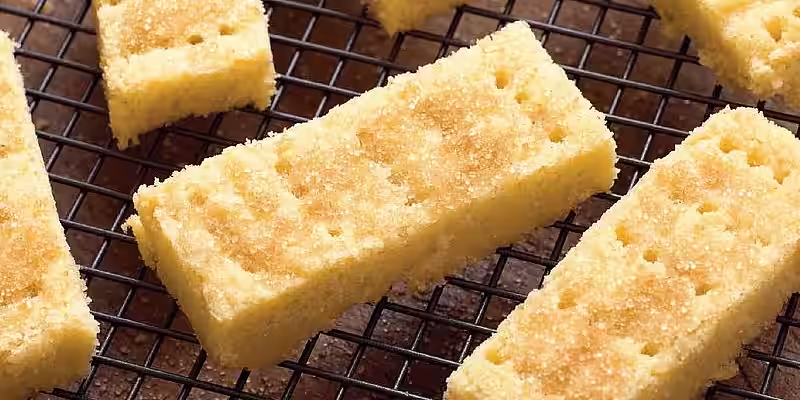
Each shortbread biscuit provides 90 kcal, 0.9g protein, 9.4g carbohydrate (of which 2.8g sugars), 5.3g fat (of which 3.3g saturates), 0.4g fibre and 0g salt. Based on the recipe making 18 biscuits.
Prep: Less than 30 mins
Cook: 10 to 30 mins
Serves: Makes approx 18
- Dietary
- Egg-free | Nut-free |Pregnancy-friendly | Vegetarian
Ingredients
- 150g/6oz plain flour
- 100g/4oz unsalted butter, softened
- 50g/2oz caster sugar, plus extra to finish
Method
Preheat the oven to 160C/140C Fan/Gas 3.
Beat the butter and the sugar together in a bowl until smooth. (You can do this in a food processor if your butter is a bit cold.)
Stir in the flour until thoroughly combined. (If you are using a food processor, you can add the flour in this way.) Turn onto a clean work surface and knead the dough just enough to bring the mixture together in to a smooth ball of dough.
Use a rolling pin to gently roll out until the dough is 1cm/½in thick.
Cut into shortbread rounds or fingers and place onto a baking tray lined with baking paper. Sprinkle with caster sugar and chill in the fridge for 20 minutes.
Bake in the oven for 25–30 minutes, or until pale golden-brown. Set aside to cool on a wire rack.
The Best Flour for Shortbread
THE RULE: You want low-protein plain flour.
For a tender, crumbly shortbread use a low gluten, low-protein flour like cake flour or a pastry flour (with a protein content of around 6-7%) is best.
For a chewier cookie use a high gluten plain flour with a high protein content, such as bread flour.
For those wanting to avoid gluten altogether, gluten-free flours like rice or a blend of gluten-free flours can be used
Just don’t use self‑raising flour. This isn’t a sponge cake mission. No one wants puffy shortbread.
Picture this: You’re standing in the baking aisle, deciding between flours, and the world’s your pastry playground. Your kitchen might be in Birmingham, Boston, Brisbane or Berlin, but the mission’s the same—chasing that golden, tender, impossibly buttery shortbread that tastes like home, no matter where you are. Let’s make it happen.
United Kingdom & Ireland
You’re scanning the shelves in Tesco, Sainsbury’s, or Waitrose. You want plain flour—the soft, low-protein stuff that crumbles under your touch.
- Homepride and Allinson? Classic picks; they’re like old friends.
- The supermarket’s own brand? Usually spot-on for a cozy bake.
- Fancy it up? Doves Farm rice flour or Waitrose Essentials cornflour, for biscuits softer than a cloud.
United States & Canada
It’s Gold Medal. It’s King Arthur. It’s Pillsbury staring you down, promising airy shortbread that melts away on your tongue before you’ve stopped smiling.
- All-purpose is your wingman.
- Want tender? Bob’s Red Mill rice flour. Feeling chef-y? Softasilk pastry flour is basically shortbread in a tuxedo.
Australia & New Zealand
White Wings or Defiance are your trusty sidekicks; Woolies and Coles brands are always ready for a tea break.
Plain flour is your soulmate, but pick up Lotus Rice Flour or Fielder’s Cornflour for that soft finish you get at Nana’s house.
France & Germany
You’ve got a baguette in one hand, and in the other, Francine T45 or Aurora Type 405—because a French tea break deserves its own shortbread moment.
Don’t overlook those neat Carrefour or Lidl own-brands, either. Sometimes cheap really is cheerful.
Italy & Spain
No passport required for “Farina 00” or Molino Spadoni, soft as silk and ready for a dolce vita treat.
- Rice flour from Molino Chiavazza? It brings that Scottish crispness.
- El Corte Inglés semolina? Total game-changer for texture freaks.
So whatever’s rattling around in your country’s baking aisle, reach for the flour with the lowest protein you can find, smile at the rice flour standing nearby (that’s your secret weapon), and picture the smell of buttery shortbread flooding your kitchen, wherever “home” is today.
Because the right flour means shortbread that breaks, melts, crumbles, and comforts—the way you remember, and maybe even better than you’ve ever had.
The Best Butter for Shortbread
THE RULE: Use high-quality, unsalted, European-style butter (82%+ fat).
To cut to the chase on which butter to use look no further than Kerrygold Unsalted (83% butterfat).
The emphasis is on UNSALTED. Why? Is the addition of salt the only difference between salted and unsalted butter
Ashia Aubourg of allrecipes.com published an I Tried 13 Unsalted Butter Brands article in a recent article. She baked shortbread with all 13 butters and rated Kerrygold Unsalted a close 2nd. next to a US-only brand.
Also last year (Nov. 2024) New York Times did a “7 Best Butters of 2025” article testing 11 unsalted butters making shortbread – Kerrygold came top.
Both these articles are of course US-focussed but Kerrygold butter is sold in over 60 countries worldwide so you should be able to pick it up no problem.
- The United States: its the number one imported butter brand.
- Germany: Kerrygold is the number one branded butter overall.
- It’s everywhere in the UK and the rest of Europe.
If you can’t get Kerrygold look for brands with higher butterfat content (often 82% or more, compared to the standard 80% in many butters). This butter will generally produce a more tender and crumbly shortbread with a richer flavour.
A lot of people also ask about Lurpak – the standard Lurpak butter – it has a minimum butterfat of 82% – so yes use it your shortbread recipe.
Kerrygold is a good bit cheaper than Lurpak though so, for me, that makes it a winner.
Make Your Own Butter
You can of course make your own unsalted butter. Its dead simple and takes about 15 minutes. But it will be a little more expensive than shop bought and there’s some gear to buy upfront. But you lose out on that superhero element of making your own.
Since heavy cream typically sold in the UK has between 36-40% butterfat, homemade butter can achieve a fat content of up to 85% or more.
(make own butter link)
The Best Sugar for Shortbread
THE RULE: Use caster sugar for classic, icing sugar for tender, granulated for crisp
Sugars You Should Use
- Caster Sugar (Superfine Sugar): This is generally considered the best option, especially for traditional shortbread. Its fine granules dissolve easily and quickly into the butter, ensuring a smooth dough without incorporating too much air, which results in the classic “short,” tender, and crumbly texture.
- Granulated White Sugar: This works well and produces a slightly more crisp shortbread. If you only have granulated sugar, you can process it briefly in a food processor or blender to make it finer, similar to caster sugar.
- Powdered Sugar (Icing Sugar): Using powdered sugar, which contains a small amount of cornstarch, yields a very soft, smooth, “melt-in-your-mouth” texture that is less crisp and more tender.
Sugars You Should Avoid
- Coarse Sugars (Demerara, Turbinado, Raw Cane Sugar): These sugars have large crystals that do not dissolve easily into the dough, leading to a gritty or overly crunchy texture. They are best used as a finishing sugar sprinkled on top of the shortbread before baking for a decorative crunch.
- Other alternative sugars like coconut sugar or date sugar will change the classic shortbread taste and quality, so they are not recommended if you want a traditional result.
Variations & Pro Tips
Look, purists will insist that real shortbread doesn’t need anything beyond the holy trinity of butter, flour, and sugar. And they’re not wrong—classic shortbread is perfect as-is.
But sometimes you want to jazz things up a bit, and shortbread’s actually pretty chill about it.
The trick is not going overboard, because remember: shortbread’s a minimalist at heart. You’re adding a guest star, not rewriting the whole script. A little goes a long way, and if you can’t taste the butter anymore, you’ve gone too far and honestly, what’s even the point?
The simplest tweak you could possibly make is sprinkle a little sugar on top of the shortbread before baking for a decorative crunch.
The most traditional move is adding a handful of rice flour or cornflour to make it even more delicate and crumbly—that’s not really a flavour thing, more of a texture flex, but it’s been around forever so it counts.
Subtle flavours
Then you’ve got the subtle stuff: a scrape of vanilla bean, a bit of lemon zest, maybe some orange if you’re feeling Mediterranean. And lavender’s become a whole thing lately, very “I shop at farmers’ markets” energy. But honestly? When it’s done right, it’s lovely.
Bolder additions
Then there’s the bolder camp—people folding in chocolate chips, chopped nuts, dried fruit, even herbs like rosemary (which sounds mental but actually works).
Some folks go full dessert mode and dip the finished biscuits in melted chocolate or drizzle them with icing. You can add spices too—cardamom, ginger, cinnamon—especially for Christmas batches.
Shaping ideas (fingers, rounds, petticoat tails)
Shortbread’s been around long enough to have developed some serious shape opinions.
The classic? Petticoat tails—those triangular wedges that look like they belong in a Victorian tea party, named after the shape of old-timey skirts (or possibly a French word, depending on who you ask, but let’s be honest, no one really knows).
Then you’ve got the fingers—rectangular, no-nonsense, perfect for dunking if you’re brave enough to risk crumbs in your tea.
There’s also the round, which is basically just pressing the whole thing into a cake tin, scoring it, and calling it a day. Dead simple, very Scottish.
But when the holidays roll around? Oh, shortbread recipes gets fancy. Suddenly you’ve got stars for Christmas, hearts for Valentine’s, shamrocks for St. Patrick’s, eggs for Easter—basically any cookie cutter you can find at the back of the drawer.
Some people even go full decorative mode with pressed designs using wooden molds that make the biscuits look like they’ve got fancy carved patterns, like tiny edible tiles. It’s the same dough, same taste, but somehow a Christmas tree shape just hits different than a boring rectangle.
Is it necessary? Absolutely not. Does it make people happier? Weirdly, yes.
The Naked Truth About Shortbread
Because there are so few ingredients to making shortbread, there’s no hiding—quality is paramount. They’ve all got to shine.
I mean it. We’re talking butter, flour, sugar. That’s it. Maybe a pinch of salt if you’re not a psychopath. There are cake recipes with longer ingredient lists than your grocery receipt, but shortbread? Nah. It’s just three things in your shortbread recipe list, standing there in broad daylight, totally exposed.
And that’s the problem—or the beauty, depending on how you look at it.
What happens when you cheap out:
Use dodgy butter? Congratulations, your shortbread now tastes like spreadable regret. That’s the main flavor. You will taste it in every crumb, and so will everyone you serve it to, and they will judge you silently while smiling.
Grab flour that’s been hanging out in the back of your cupboard since 2019? Cool, cool. Enjoy your weirdly flat, slightly stale-tasting biscuits that somehow feel like they’ve given up on life.
Skimp on the sugar or use something nasty? Yeah, that’s coming through too. Because unlike a chocolate cake where you can drown your sins in cocoa and vanilla, shortbread is honest. Brutally so.
Why this matters:
Shortbread doesn’t have backup dancers. There’s no cinnamon to swoop in and save the day. No chocolate chips playing distraction. No lemon zest doing PR work for your mistakes. It’s just butter, flour, and sugar standing on stage under a spotlight going, “Well? Did you bring the good stuff or not?”
And people will notice. Because shortbread, when it’s done right, is this impossibly simple, melt-in-your-mouth thing that tastes like pure buttery heaven. But when it’s done badly? It’s just… sad. Like a biscuit that knows it could’ve been more.
So here’s the deal:
Get the best butter you can afford—the kind that actually tastes like butter, not like something that remembers butter from a distance. Use fresh flour. Proper sugar. Don’t overthink it, but for the love of all things crumbly, don’t under-think it either.
Because shortbread doesn’t lie. It can’t. There’s nowhere for it to hide.
And honestly? That’s kind of beautiful. It’s just three ingredients being completely themselves. No fuss, no extras, no safety net. Just quality showing up and doing the work.
Your gran knew this. Now you do too.
1
1
1
1
Keyword | Vol | CPC | SD | PD | |
|---|---|---|---|---|---|
| recipe for shortbread | 90.5k | £0.48 | 17 | 1 | |
| recipe for shortbread biscuits | 90.5k | £0.72 | 20 | 1
|
| mary berry recipe for shortbread | 2.4k | £0 | 5 | 1 |
The 321 shortbread = 3 parts flour + 2 psrts butter + 1 part sugar
The Secret to the Best Ever Shortbread (Just Like Gran Made)
Flour Power: Keep It Plain and Simple
Plain flour is your friend.
For a tender, crumbly shortbread use a low gluten, low-protein flour like cake flour or a pastry flour (with a protein content of around 6-7%) is best.
For a chewier cookie use a high gluten plain flour with a high protein content, such as bread flour.
For those wanting to avoid gluten altogether, gluten-free flours like rice or a blend of gluten-free flours can be used
Just don’t use self‑raising flour. This isn’t a sponge cake mission. No one wants puffy shortbread.
Butter: The Soul of the Thing (Trust the Fat)
Now, about the butter. Butter isn’t cheap but please don’t cheap out. Think golden, rich, European‑style butter with roughly 82 to 85 percent butterfat. Kerrygold Unsalted is your go-to for this. Scottish grannies didn’t mess around here — they knew flavour starts with fat. Cold butter will give you that perfect crumbly, melt‑in‑the‑mouth feel. Warm butter? That’s a one‑way ticket to biscuit mush.
Sugar Choices and Sweet Logic: Crunch or Velvet?
Granulated sugar gives you that light crunch. Icing sugar? A smooth, tender finish. Either way, they both have their moment. If you want to play scientist, split the batch and try both. Call it an experiment. Eat the evidence.
The Big Don’ts: Handle With Care
Do not — I repeat — do not overwork the dough. The second you start kneading it like you’re making pizza, you’ve lost it. Gluten will form, and you’ll end up with something that more like a cracker instead of crumbling like a dream.
Also, go easy with the flour dusting. Too much and your dough turns into sandy sadness.
Bake Like You Mean It: Fork Holes and Golden Dreams
Poke those little fork holes across the top — it’s not just out of tradition but to let steam sneak away so your shortbread stays perfectly flat and cooks evenly. Bake low and slow (150°C fan hit the spot here), and pull it from the oven when it starts to blush gold, not burnt brown.
And, if you want, scatter a pinch of coarse sugar over the top before baking—it sparkles, it crunches, it’s all kinds of fancy without trying too hard.
Scottish Shortbread
Scottish shortbread sticks to tradition: flour, butter, sugar, salt. Some recipes throw in shortening, but true fans know why butter wins every time.
The Final Word: A Hug in Biscuit Form
Shortbread’s beauty is its simplicity. Keep the 3:2:1 ratio. Use the best ingredients you can afford. Don’t overmix it. Bake it gently until it’s pale gold and smells like a dream. Your first buttery, crumbly bite will remind you why its all been worth it.
No fluff, no faff, no mixer wars. Just good shortbread — the way Gran meant it.
CHOOSING THE BEST INGREDIENTS
Because there are so few ingredients to making shotbread there’s no hiding – they’ve all got to shine – they’ve all got to be teh best quality you can afford.
THE BEST FLOUR:
Picture this: You’re standing in the baking aisle, deciding between flours, and the world’s your pastry playground. Your kitchen might be in Birmingham, Boston, Brisbane or Berlin, but the mission’s the same—chasing that golden, tender, impossibly buttery shortbread that tastes like home, no matter where you are. Let’s make it happen.
United Kingdom & Ireland
You’re scanning the shelves in Tesco, Sainsbury’s, or Waitrose. You want plain flour—the soft, low-protein stuff that crumbles under your touch.
- Homepride and Allinson? Classic picks; they’re like old friends.
- The supermarket’s own brand? Usually spot-on for a cozy bake.
- Fancy it up? Doves Farm rice flour or Waitrose Essentials cornflour, for biscuits softer than a cloud.
United States & Canada
It’s Gold Medal. It’s King Arthur. It’s Pillsbury staring you down, promising airy shortbread that melts away on your tongue before you’ve stopped smiling.
- All-purpose is your wingman.
- Want tender? Bob’s Red Mill rice flour. Feeling chef-y? Softasilk pastry flour is basically shortbread in a tuxedo.
Australia & New Zealand
White Wings or Defiance are your trusty sidekicks; Woolies and Coles brands are always ready for a tea break.
Plain flour is your soulmate, but pick up Lotus Rice Flour or Fielder’s Cornflour for that soft finish you get at Nana’s house.
France & Germany
You’ve got a baguette in one hand, and in the other, Francine T45 or Aurora Type 405—because a French tea break deserves its own shortbread moment.
Don’t overlook those neat Carrefour or Lidl own-brands, either. Sometimes cheap really is cheerful.
Italy & Spain
No passport required for “Farina 00” or Molino Spadoni, soft as silk and ready for a dolce vita treat.
- Rice flour from Molino Chiavazza? It brings that Scottish crispness.
- El Corte Inglés semolina? Total game-changer for texture freaks.
So whatever’s rattling around in your country’s baking aisle, reach for the flour with the lowest protein you can find, smile at the rice flour standing nearby (that’s your secret weapon), and picture the smell of buttery shortbread flooding your kitchen, wherever “home” is today.
Because the right flour means shortbread that breaks, melts, crumbles, and comforts—the way you remember, and maybe even better than you’ve ever had.
======================================================================
2: THE BEST BUTTER
To cut to the chase on which butter to use look no further than Kerrygold Unsalted (83% butterfat).
The emphasis is on UNSALTED. Why? Is the addition of salt the only difference between salted and unsalted butter
Ashia Aubourg of allrecipes.com published an I Tried 13 Unsalted Butter Brands article in May of this year (2025). She baked shortbread with all 13 butters and rated Kerrygold Unsalted a close 2nd. next to a US-only brand.
Also Last year (2Nov. 024) New York Times did a “7 Best Butters of 2025” article testing 11 unsalted butters making shortbread – Kerrygold came top.
Both these articles are of course US-focussed but Kerrygold butter is sold in over 60 countries worldwide so you should be able to pick it up no problem.
- The United States: its the number one imported butter brand.
- Germany: Kerrygold is the number one branded butter overall.
- Its everywhere in the UK and the rest of Europe.
If you can’t get Kerrygold look for brands with higher butterfat content (often 82% or more, compared to the standard 80% in many butters). This butter will generally produce a more tender and crumbly shortbread with a richer flavour.
A lot of people also ask about Lurpak – the standard Lurpak butter – it has a minimum butterfat of 82% – so yes use it for shortbread.
Kerrygold is a good bit cheaper than Lurpak though so, for me, that puts it ahead of Lurpak.
You can of course make your own unsalted butter. Its dead simple and takes about 15 minutes. But it will be a little more expensive than shop bought and there’s some gear to buy upfront. But you lose out on that sperhero element of making your own.
Since heavy cream typically sold in the UK has between 36-40% butterfat, homemade butter can achieve a fat content of up to 85% or more.
(make own butter link)
THE BEST SUGAR
- Caster Sugar (Superfine Sugar): This is generally considered the best option, especially for traditional shortbread. Its fine granules dissolve easily and quickly into the butter, ensuring a smooth dough without incorporating too much air, which results in the classic “short,” tender, and crumbly texture.
- Granulated White Sugar: This works well and produces a slightly more crisp shortbread. If you only have granulated sugar, you can process it briefly in a food processor or blender to make it finer, similar to caster sugar.
- Powdered Sugar (Icing Sugar): Using powdered sugar, which contains a small amount of cornstarch, yields a very soft, smooth, “melt-in-your-mouth” texture that is less crisp and more tender.
Sugars You Should Avoid
- Coarse Sugars (Demerara, Turbinado, Raw Cane Sugar): These sugars have large crystals that do not dissolve easily into the dough, leading to a gritty or overly crunchy texture. They are best used as a finishing sugar sprinkled on top of the shortbread before baking for a decorative crunch.
- Other alternative sugars like coconut sugar or date sugar will change the classic shortbread taste and quality, so they are not recommended if you want a traditional result.
The Naked Truth About Shortbread
Because there are so few ingredients to making shortbread, there’s no hiding—quality is paramount. They’ve all got to shine.
I mean it. We’re talking butter, flour, sugar. That’s it. Maybe a pinch of salt if you’re not a psychopath. There are cake recipes with longer ingredient lists than your grocery receipt, but shortbread? Nah. It’s just three things standing there in broad daylight, totally exposed.
And that’s the problem—or the beauty, depending on how you look at it.
What happens when you cheap out:
Use dodgy butter? Congratulations, your shortbread now tastes like spreadable regret. That’s the main flavor. You will taste it in every crumb, and so will everyone you serve it to, and they will judge you silently while smiling.
Grab flour that’s been hanging out in the back of your cupboard since 2019? Cool, cool. Enjoy your weirdly flat, slightly stale-tasting biscuits that somehow feel like they’ve given up on life.
Skimp on the sugar or use something nasty? Yeah, that’s coming through too. Because unlike a chocolate cake where you can drown your sins in cocoa and vanilla, shortbread is honest. Brutally so.
Why this matters:
Shortbread doesn’t have backup dancers. There’s no cinnamon to swoop in and save the day. No chocolate chips playing distraction. No lemon zest doing PR work for your mistakes. It’s just butter, flour, and sugar standing on stage under a spotlight going, “Well? Did you bring the good stuff or not?”
And people will notice. Because shortbread, when it’s done right, is this impossibly simple, melt-in-your-mouth thing that tastes like pure buttery heaven. But when it’s done badly? It’s just… sad. Like a biscuit that knows it could’ve been more.
So here’s the deal:
Get the best butter you can afford—the kind that actually tastes like butter, not like something that remembers butter from a distance. Use fresh flour. Proper sugar. Don’t overthink it, but for the love of all things crumbly, don’t under-think it either.
Because shortbread doesn’t lie. It can’t. There’s nowhere for it to hide.
And honestly? That’s kind of beautiful. It’s just three ingredients being completely themselves. No fuss, no extras, no safety net. Just quality showing up and doing the work.
Your gran knew this. Now you do too.
======================= details probably unnecessary follow
UK & Ireland
- Kerrygold: This Irish butter is consistently recommended by professional bakers and home users for shortbread. Its rich flavour and distinct golden colour come from the grass-fed cows’ milk, which has a higher butterfat content than many standard butters. It provides a superior, rich, and “buttery” taste essential for shortbread. Both salted and unsalted versions work well; if using salted, simply omit or reduce the added salt in your recipe.
- Other European-style butters: Brands with higher butterfat content (often 82% or more, compared to the standard 80% in many butters) generally produce a more tender and crumbly shortbread with a richer flavour.
- Lurpak: A widely available European brand that is considered a good quality option for baking and is a popular choice in the UK.
- Supermarket Own-Brand “Finest” or “Best”: Many supermarket premium ranges (e.g., Tesco Finest, Sainsbury’s Taste the Difference) offer good quality butters that perform well in baking and can be a more budget-friendly alternative to premium brands.
- High Butterfat Content: The less moisture/water content, the better the shortbread’s texture and richness will be. This is why Irish and European-style butters are preferred.
- Quality and Flavour: Since butter is the star ingredient, its flavour is paramount. Grass-fed butters like Kerrygold have a notably rich taste that enhances the final product.
- Unsalted (usually): While some people use salted butter for personal preference, unsalted butter is typically recommended for baking as it allows you to control the amount of salt in the recipe precisely.
UNITED STATES & CANADA:
Kerrygold’s unsalted butter came close to taking the top spot, right alongside Organic Valley. It helped create incredibly flaky, crumbly shortbread that melts in your mouth with every bite. Thanks to its cultured flavor profile, the cookies came out tasting especially rich and pronounced with buttery notes.
1st Place Winner: Organic Valley Unsalted Butter
Top 2 Kerrigold unsalted
- Kerrygold: This Irish brand (widely available in the US, often at Costco for a good value) is grass-fed and known for its rich, creamy taste and higher fat content, which yields a tender, sandy, and melt-in-your-mouth shortbread.
- Plugrá: A European-style butter with a higher butterfat content (at least 82%) than typical American butters. It enhances flavor and texture, making it a favorite among many bakers.
- Vital Farms Pasture-Raised Butter: Another grass-fed option praised for its strong, rounded, buttery flavor and the distinct layers and flakiness it provides to baked goods.
- Land O’Lakes: While it has a typical American fat content (around 80%), it is widely available, consistently reliable, and a solid choice for everyday baking, especially when you prioritize consistency and control over salt content.
- Lactantia: Often cited as Canada’s number one butter brand, it is made with 100% pure pasteurized cream and is a popular, reliable choice for baking shortbread due to its rich, creamy taste.
- Gay Lea: This brand from a Canadian dairy farmer cooperative is praised for its creamy texture and is a good, widely available option for shortbread.
- Stirling Creamery: Offers a premium, European-style butter with a higher butterfat content, which can contribute to a more luxurious texture in shortbread cookies.
- Fraser Valley: Highly recommended by some home bakers for shortbread, particularly the whipped style, as it’s known to have less moisture than some other butters.
AUSTRALIA & NEW ZEALAND BUTTER
- Pepe Saya Cultured Butter: This handcrafted, cultured butter is highly regarded by bakers for its rich, complex flavor, which translates well in shortbread.
- Western Star Chef’s Choice Unsalted Cultured Butter: Known for its creamy, continental taste and high quality, it is a popular choice for baking where a rich butter flavour is desired.
- Duck River Meadows Dairy Premium Butter: Sourced from Tasmania, this butter is known for its rich, full-bodied flavour. It has won awards and is a top pick, though it might be harder to find outside of Tasmania.
- Norco: An Australian farmers’ cooperative brand that produces quality butter, often recommended for general baking.
- Gippsland Jersey: This brand is also mentioned as a top choice for its quality and flavor.
- Lewis Road Creamery Premium Unsalted Butter: This handcrafted, small-batch butter from grass-fed cows has a high butterfat content, making it excellent for shortbread’s texture and a deep, buttery aroma.
- Anchor Butter (Block): A widely available and reliable pure New Zealand butter, known for its full creamy flavor and consistent results in baking.
- Westgold Unsalted Butter: Also made from pure New Zealand cream, Westgold is a popular, high-quality option that is readily available in many supermarkets.
- Mainland: Another quality pure New Zealand butter brand, often praised for its taste and suitability for baking.
- Unsalted Butter: Generally preferred for shortbread recipes to control the salt level precisely.
- High Butterfat Content: Butters with higher fat content (like cultured or European-style butters) will yield a more tender, buttery, and crisp shortbread.
- Grass-Fed: Many Australian and New Zealand butters come from grass-fed cows, which results in a naturally more golden hue and richer flavour profile.
FRANCE & GERMANY BUTTER
- Isigny Sainte-Mère: A premium brand with Protected Designation of Origin (PDO) status, known for its rich, creamy, and subtly nutty flavor. It is an excellent choice for baking shortbread.
- Échiré: Another top-tier AOP (PDO) butter, known for its exceptional quality and a unique flavor profile that is highly favored by chefs and bakers.
- Bordier: An artisanal, hand-kneaded butter from Brittany, praised for its complex flavor and silky texture. It is often used as a finishing butter, but the plain (doux or demi-sel) varieties can be used for superior shortbread.
- Lescure: This brand offers AOP certified butter from the Charentes-Poitou region, with a delicate, nutty aroma, which is a favorite among pastry chefs for consistent results.
- Président: A widely available, mass-market French brand that still offers a superior taste and higher fat content compared to many non-European butters, making it a good, accessible option for shortbread.
- Landliebe: A well-known German brand offering a rich and creamy butter that is a good choice for baking shortbread, providing a classic, full-bodied butter taste.
- Meggle: Another popular German brand known for quality dairy products, their butter can be used to produce great-tasting shortbread cookies.
- Weihenstephan: This brand, from one of the world’s oldest dairies, is recognized for its high standards and creamy butter, which would work well in shortbread.
- Kerrygold: Though Irish, Kerrygold is the leading butter brand in Germany and is widely used for baking due to its high fat content and rich flavor from grass-fed cows. It is an excellent and often readily available option.
ITALY & SPAIN BUTTER FOR SHORTBREAD
- Beppino Occelli (Burro Occelli): This is widely regarded as one of Italy’s best butters, known for its creamy texture and authentic, rich taste derived from sweet cream. It’s a top choice for desserts.
- Fattorie Fiandino (Burro 1889): This premium butter is noted for its delicate flavor with subtle almond notes, produced from fresh cream that is rested for 72 hours.
- Caseificio Sepertino (Burro Sepertino): A high-quality butter that has received awards for its excellent taste and creamy consistency.
- Latteria Vipiteno (Burro Vipiteno): Known for a mild yet rich dairy taste and creamy texture, suitable for various baking needs.
- Mantequilla Lorenzana: This brand uses traditional production methods, including a hand-churning process that gives it a unique texture and pure flavor. The unsalted variety is ideal for baking.
- Mantequilla de Soria: This high-quality butter, protected by a Designation of Origin, is made from local cow’s milk and has a taste reminiscent of fresh cream. It comes in a natural (unsalted) version.
- Mantequilla de l’Alt Urgell y la Cerdanya: Another high-quality, P.D.O. protected butter from the Pyrenees region, known for its smooth texture and complex, nutty, and fruity aroma, which would add depth to shortbread.
- Imported Premium Butters: Brands with higher butterfat content are ideal for shortbread’s rich, crumbly texture.
- Lurpak
- President
- Emborg (if available)
- Kerrygold (often recommended by professional bakers, if you can find it)
- Note: These may be found in specialty shops in major cities in India and South Asia.
- Local Options:
- Amul Unsalted Butter: This is a widely available and good option in India. Bakers have reported good results with it for various baked goods, including cookies.
- Mother Dairy and Vita: These are other local brands in India that are considered good quality alternatives to Amul.
FLOUR
what kind of flour to use for shortbread
- All-purpose flour: This is the standard flour for shortbread and provides a good structure.
- Rice flour: Replacing up to one-third of the all-purpose flour with rice flour gives a softer, more delicate texture.
- Cornstarch: Similar to rice flour, substituting some all-purpose flour with cornstarch will create a more tender result.
- Semolina: Using semolina instead of some flour will produce a slightly crunchier shortbread.
- Cake or pastry flour: These lower-protein flours can also be used to achieve a more delicate and crumbly texture, though all-purpose is a reliable choice.
- Self-raising flour: This contains a leavening agent that will make the shortbread rise, which is not the desired effect for this type of cookie.
- Overmixing: Once the flour is added, mix only until it just comes together to avoid a tough cookie.
UK Flour for SHortbread
- Doves Farm Organic Plain White Flour: This is described as a fine flour crafted from soft wheat, ideal for pastries and biscuits, suggesting a suitable protein level for tender shortbread.
- Carr’s Plain Flour: This versatile flour is specifically recommended for biscuits, cakes, and pastries.
- Ocado British Plain Flour: Also mentioned as being ideal for pastries and shortbread.
- Homepride Plain Flour and Marriage’s Finest Plain Flour are also reliable options for general baking.
- Avoid Self-Raising Flour: Do not use self-raising flour, as the added leavening agents will make the shortbread rise, resulting in a cake-like or sturdier cookie rather than the traditional dense, crumbly shortbread.
- Consider Cornstarch or Rice Flour: For an even more delicate and “short” (crumbly) texture, some traditional recipes incorporate a small amount of cornstarch or rice flour to dilute the gluten proteins in the plain flour.
- Refrigerate the Dough: Chilling the shortbread dough before baking helps it hold its shape and prevents the butter from melting too quickly and spreading, which further contributes to the desired texture
- Odlums: A very well-known and trusted Irish brand, their Plain Cream Flour is suitable for shortbread.
- Neill’s Flour: Another traditional Irish miller, their Golden Fleece Plain Flour is appropriate for pastry and biscuits.
- White Lily All-Purpose Flour: This brand is highly recommended, especially in the Southern US, because it is made from soft red winter wheat and has a low protein content (around 7-8%), similar to a true pastry flour. This results in a very tender, delicate shortbread texture.
- Gold Medal All-Purpose Flour: This is a widely available “workhorse” flour that is frequently mentioned as a reliable choice for cookies. It has a slightly lower protein level than some other national brands, which helps produce a lighter, more delicate texture in shortbread compared to higher-protein alternatives.
- King Arthur Unbleached All-Purpose Flour: While King Arthur flour has a higher, more consistent protein content (around 11-12%) than some other AP flours, many bakers use it successfully and swear by its reliable performance for all baking needs, including cookies. The resulting shortbread will likely be a bit sturdier than with a softer flour, but still excellent.
- Pillsbury All-Purpose Flour: Another readily available national brand that many home cooks use with consistent success for cookies and other baked goods.
- All-Purpose (AP) Flour: Most recipes call for AP flour, which is a blend of hard and soft wheat.
- Bleached vs. Unbleached: Both bleached and unbleached flours work well. King Arthur is typically unbleached, while other brands offer both options.
- Protein Content: For a melt-in-your-mouth shortbread, generally look for a lower protein content. If you want a sturdier cookie, a higher protein AP flour is fine.
- Add Rice Flour or Cornstarch: To mimic the tenderizing effect of traditional Scottish shortbread (which often uses a mix of wheat and rice flour), you can substitute a small amount of the wheat flour with rice flour or cornstarch (cornflour).
- Experiment: Different brands and local store brands can produce great results; some bakers find a particular store brand works better for them than national brands
GERMAN FLOUR FOR SHORTBREAD
- Aurora
- Alnatura (organic option available at drugstores like DM and supermarkets like Edeka)
- Bohlsener Mühle
- Supermarket own-brands from major chains like Edeka, Rewe, Lidl, or Penny
- T45 is a very fine, low-ash, low-protein pastry and cake flour, which results in a particularly light and fluffy texture, ideal for delicate shortbread.
- T55 is considered the French equivalent of all-purpose or plain flour. It has slightly more protein than T45 but still produces excellent results for shortbread (also known as sablés in French) with a good balance of tenderness and structure.
- Francine: This is a very common brand widely available in French supermarkets. They offer both T45 and T55 flours, often labeled as “Farine de Blé Tous Usages” (All-Purpose Wheat Flour) or specifically “T45” or “T55”.
- Matthews Cotswold Flour / Moulin Saint Martin: These brands offer premium French flours. Look for their “Belle Pure T45” or “Belle Blanc T55” products.
- Foricher: This brand is well-regarded by professional bakers and is available from specialist suppliers. They produce “Farine de Gruau T45” (often used for croissants/brioche but excellent for other fine pastries) and “Foricher Bagatelle® T55” for biscuits and cakes.
- Moul-Bie: Another professional-grade brand available from specialist retailers, offering T45 and T55 flours suitable for pastries and biscuits.
- Manildra Plain Flour (also sold under the name “Gem of the West Plain Flour”): This brand is highly regarded and widely used in Australia by both home bakers and commercial bakeries.
- White Wings Plain Flour: A premium, easily accessible supermarket option made from quality Australian wheat grains that consistently yields good baking results.
- Woolworths or Coles Home Brand Plain Flour: These supermarket own-brand plain flours are an economical and effective choice for shortbread.
- Lighthouse Plain Flour: Part of the Lighthouse brand range, this is another quality option available in supermarkets.
- All-Purpose Flour: This is the most common and versatile choice for home bakers. Canadian all-purpose flour has a moderate protein content that works well for shortbread, especially if you modify the recipe slightly (e.g., replace a small amount with cornstarch or rice flour for extra tenderness).
- Brand Names:
- Robin Hood (Original All Purpose or Unbleached All Purpose)
- Five Roses (All Purpose)
- President’s Choice (No Name All Purpose Unbleached)
- Brand Names:
- Pastry Flour: If you can find it, pastry flour is considered ideal because its protein content (around 6-7%) is lower than all-purpose flour, resulting in a lighter, flakier cookie.
- Brand Names: Specific Canadian brands of pastry flour may require checking at local grocery stores or specialty baking shops.
- Rice Flour: Many traditional Scottish shortbread recipes call for replacing some of the all-purpose flour with rice flour to achieve a uniquely sandy and crisp texture.
- Brand Names:
- Bob’s Red Mill (White Rice Flour)
- Clubhouse (available in the spice aisle)
- You can also find it at Bulk Barn stores in Canada.
- Brand Names:
People also ask
- Caster sugar: This is the preferred choice for its fine texture, which melts quickly into the butter. It helps the shortbread have a classic, crisp texture without being gritty.
- Powdered (icing) sugar: Using powdered sugar results in a softer, more delicate cookie with a slightly different texture. Be aware that it often contains cornstarch, which can affect the final consistency.
- Granulated sugar: This is a common substitute and works well, especially if you process it into a finer consistency before adding it to the butter.
- Demerara or sanding sugar: These are best used as a finishing sugar for dusting the top of the shortbread before or after baking for a bit of extra crunch.
For shortbread, use good-quality, firm block butter, either salted or unsalted. Unsalted butter is often preferred so you can control the saltiness, but if you use salted, simply omit any added salt in the recipe. Avoid soft, spreadable butter or margarine, as this can make the dough too soft and cause the shortbread to spread in the oven.
- Type:Use firm, block butter, not spreadable butter or margarine.
- Salted vs. Unsalted:Both can work, but unsalted allows for greater control over the final saltiness. If using salted, reduce or omit the extra salt called for in the recipe.
- Type:Use firm, block butter, not spreadable butter or margarine.
- Quality:Since shortbread has few ingredients, the quality of the butter is a key factor in the final flavor. Opt for good quality butter if possible. Some bakers recommend European-style butter for a richer taste.
European-style butter is a type of butter with a higher fat content (82-85% minimum) and a creamier texture compared to American butter (80% minimum). It may also be cultured, which adds a tangy, fermented flavor. The higher fat content makes it ideal for creating flakier pastries, while its richer taste and texture are excellent for spreading on bread or melting over dishes.
- Higher butterfat content: European butter has a minimum butterfat content of 82%, while American butter is required to have a minimum of 80%. This extra fat creates a richer flavor and creamier texture.
- Longer churning time: It is typically churned for a longer period, which helps achieve the higher fat content.
- Culturing process: Many European butters are cultured, meaning bacteria are added to the cream before churning to develop a slightly tangy, fermented flavor.
- Deeper yellow color: The butter often has a deeper yellow hue, a result of the cream’s higher beta-carotene levels, which comes from the grass-fed diets of cows in Europe.
- Lower water content: The higher fat percentage means a lower water content, which contributes to its denser, creamier texture and better performance in laminated doughs like croissants or puff pastry.
- Best for baking: The higher fat content is excellent for creating flaky layers in pastries and pie crusts.
- Finishing dishes: It is a wonderful finishing butter for spreading on warm bread, melting over steak, or mixing into sauces.
- Irish butter, such as the widely available Kerrygold brand, is a type of European-style butter itself. It shares key characteristics like a high butterfat content (typically 82% or more) and a rich, creamy texture due to the cows’ grass-fed diet.The main distinctions between typical Irish butter and other continental European butters are:
- Culturing: Most Irish butter is uncultured (sweet cream butter), meaning no live bacterial cultures are added, giving it a sweeter, milder flavor. In contrast, much of the butter produced in countries like France (e.g., Isigny Ste-Mère, Président) is cultured, a process that provides a distinctly tangy, slightly lactic flavor and longer shelf life.
- Salinity: Irish butter is often sold salted, while most traditional European butters used for baking and general cooking are unsalted, allowing for more precise salt control in recipes.
If you are looking for an Irish butter that closely matches the taste and texture of a high-fat European butter, Kerrygold is the standard and most accessible option. Its high butterfat content provides the rich mouthfeel similar to other European butters, but without the added tang of culturing. Some specialty stores might carry other less common Irish brands, but Kerrygold is generally representative of the Irish style and is widely considered a European-style butter in terms of its composition and quality.Flavor: Use it when you want a richer, more complex flavor, especially if it is cultured butter with a tangy note.
- Origin: Made by Bungay in Norfolk, UK.
- Ingredients and process: Uses Jura breed cows and a lactic culture, similar to northern French butter.
- Flavor profile: Features notes of hazelnut, sweet salt, and milk, with a rich and complex flavor.
- Texture: Supple and creamy due to slow maturation and churning.
- High butterfat content: Both Bungay and European-style butter have a higher butterfat content (minimum of 82% in Europe) compared to standard butter (around 80%).
- Cultured cream: The use of cultured cream in both provides a richer, tangier flavor and creamier texture.
- Flavor: The slow maturation and culturing process in Bungay butter results in a flavor profile that is highly comparable to traditional European butters, particularly those from Normandy.
- Kerrygold: While often cited as a high-quality butter with a rich, creamy texture, it is Irish butter, not British. Although similar to European butter in richness, Bungay is made in Britain.
- Other British butters: Most standard British butters are not cultured and have a lower butterfat content than European style butter, which is why they are not as close in qualit
:max_bytes(150000):strip_icc():format(webp)/ashia-aubourg-552f9d5dff0d45de82dd364e81c14dfe.jpg)