This is more than just a recipe for roast leg of lamb
It’s your practical companion for getting the whole meal on the table — whether that’s a simple, midweek-style roast with quick gravy and a couple of easy sides, or a fully planned dinner where you want drinks, timing, and presentation all sorted.

You don’t need to use every part of this guide every time. Pick what you need for the kind of meal you’re making today and leave the rest. The aim is to help you feel calm and in control in the kitchen, whatever level of effort you’re going for. Just remember, a good roast leg of lamb doesn’t need to be perfect to be memorable: if the lamb is hot, there’s something tasty to spoon over it, and people are comfortable around your table, you’ve done it right.
Recipe For Roast Leg of Lamb
This is a straightforward, dependable way to roast a leg of lamb in a normal home kitchen. No tricks, no stress — just a method you can follow with confidence.
Ingredients
- 1 leg of lamb (about 2–2.5kg, bone-in or boneless)
- 4–6 garlic cloves
- A few sprigs of fresh rosemary
- Olive oil
- Sea salt
- Black pepper
- 1 lemon
- 1 anchovy fillet (optional – you can leave this out without much change to the finished dish)
- 1 onion, cut into thick chunks (optional – you can leave this out if you don’t have one)
- A splash of water or stock for the tray (optional – the leg of lamb will still roast fine without it)
Cooking Times for Leg Of Lamb
Roast for pink/medium (20 min per 500g + 20 min) or well done (25 min per 500g + 20 min). See table below.
Note: Bone-in: Use times below. Boneless: Reduce by 15-20 minutes
| Weight | Pink/Medium Total Time | Well Done Total Time |
| 1kg | 1hr (60 min) | 1hr 15min (75 min) |
| 1.5kg | 1hr 20min (80 min) | 1hr 50min (110 min) |
| 2kg | 1hr 40min (100 min) | 2hr (120 min) |
| 2.5kg | 2hr (120 min) | 2hr 25min (145 min) |
Equipment Needed
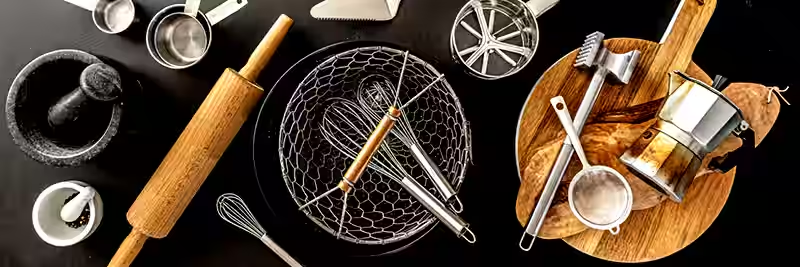
These are the basics you’ll need to roast a leg of lamb successfully. Nothing fancy — just practical tools that make the process easier. Optional extras are noted at the end.
- Large roasting tray – big enough for a 2.5 kg leg of lamb.
- Sharp knife – for cutting garlic and trimming any tough fat.
- Meat thermometer – highly recommended for checking doneness without cutting into the meat.
- Small mixing bowl – to combine garlic, lemon, and olive oil for the rub.
- Serving board or platter – for resting and presenting the lamb.
Optional / helpful tools:
- Carving knife and fork – makes slicing easier at the table.
- Tongs – useful for handling the leg of lamb and moving veg around the tray.
- Roasting rack – allows air to circulate under the lamb, for slightly crisper skin.
Tip: If you don’t have every tool, you can still roast successfully — just adapt what you’ve got in the kitchen.
Shop the Tools for This Recipe →
Pro tip: Even if you don’t have every item, the roasting tray and thermometer are the two most useful tools to get a reliably tasty roast. Everything you need for a perfect roast leg of lamb, all in one place. Optional extras are marked.
Tool Affiliate Link Notes Large roasting tray Buy here Must fit up to 2.5 kg leg of lamb Sharp knife Buy here For garlic and trimming fat Meat thermometer Buy here Highly recommended for perfect doneness Small mixing bowl Buy here For rubs and marinades Serving board / platter Buy here For resting and serving Carving knife & fork (optional) Buy here Makes slicing easier Tongs (optional) Buy here Useful for turning veg or moving meat Roasting rack (optional) Buy here Lets air circulate for crispier skin
Method
- Take the leg of lamb out of the fridge about an hour before you cook it so it loses the chill.
- Heat the oven to 220°C (fan 200°C / Gas 7).
- Peel and slice the garlic. Pull the rosemary into small pieces.
- Use a small knife to make short cuts all over the lamb. Push bits of garlic and rosemary into the cuts.
- Put the lamb in a large roasting tray. Rub it all over with olive oil, salt, and pepper.
- Grate the lemon skin over the lamb, then squeeze a little of the juice on top.
- If using the anchovy, mash it with a fork and rub it into the meat with the oil and seasoning.
- Scatter the onion chunks around the lamb if you’re using them. Pour a small splash of water or stock into the tray.
- Put the tray in the hot oven for 20 minutes at the 220°C (fan 200°C / Gas 7) temperature to get some colour on the outside.
- Turn the oven down to 170°C (fan 150°C / Gas 3½).
- Roast for about 1 hour 30 minutes for pink lamb, or closer to 2 hours if you want it more cooked. Start checking at 1hr and every 15 minutes after that. Check doneness:
pierce the thickest part — the juices should be lightly pink for medium, clear for well done.
OR use thermometer: Pink: 55–60°C | Medium: 65–70°C | Well done: 75°C+ (Temp rises 5–10°C during rest) - Take the roasted leg lamb out of the oven. Lift it onto a board or plate. Loosely cover with foil and leave it alone for at least 20 minutes before cutting.
- Quick Gravy: simply strain the tray juices into a pan, mix in 1 tsp flour and a splash of red wine/stock and simmer. Season and thicken to taste.
OR follow the full gravy recipe below.
To Serve
- Let the lamb rest before cutting — this keeps it soft and juicy.
- Slice thickly for a main roast, thinner for sandwiches the next day.
- Spoon the tray juices over the meat at the table.
- Any leftovers keep well in the fridge for a couple of days and are great cold or reheated gently. Cool completely, store in juices. Reheat slices gently in gravy (65°C max) or eat cold in sandwiches.
Common Roast Leg of Lamb Mistakes (and Easy Fixes)
Here’s what might go wrong — and how to fix it without stress. You’re probably closer to a good dinner than you think.
Mistake: You forgot to take the lamb out of the fridge early
- What you’ll notice: The outside is colouring fast but the middle feels very cold
- How to fix it: Turn the oven down a notch and give it more time. If the top is getting too dark, lay a loose bit of foil over it and keep roasting.
Mistake: The lamb is getting too dark on top
- What you’ll notice: The skin is browning fast and looks close to burning
- How to fix it: Loosely cover the lamb with foil and turn the oven down slightly. It will keep cooking without darkening any more.
Mistake: The lamb looks pale and unappetising
- What you’ll notice: It’s cooking through but doesn’t look very roasted
- How to fix it: Turn the oven up for the last 10–15 minutes to give it more colour.
Mistake: The tray looks dry
- What you’ll notice: There’s very little liquid in the bottom and it smells like it might catch
- How to fix it: Pour in a small splash of water or stock and scrape the tray gently to loosen anything stuck.
Mistake: The lamb feels firmer than you expected
- What you’ll notice: It doesn’t give much when you press it
- How to fix it: Take it out, loosely cover with foil, and let it rest longer. It will soften as it sits. If it still feels too firm, slice thinly when serving.
Mistake: The lamb looks undercooked
- What you’ll notice: The middle is very pink and looks raw to you
- How to fix it: Put it back in the oven for another 10–15 minutes, then check again. You can always cook it more.
Mistake: You’ve cooked it more than you meant to
- What you’ll notice: The meat looks grey inside and a bit dry
- How to fix it: Slice it thinly and spoon plenty of tray juices over the top. Serve with something moist on the side.
Mistake: You cut into it straight away
- What you’ll notice: Juices run out onto the board and the slices look dry
- How to fix it: Put the slices back together on a warm plate, spoon the tray juices over, loosely cover with foil, and give it 5–10 minutes before serving.
Mistake: The garlic on the surface looks burnt
- What you’ll notice: Dark bits stuck to the outside
- How to fix it: Pick off the burnt bits and carry on. The meat underneath will still be fine.
Mistake: Dinner is late
- What you’ll notice: The lamb is ready before everything else
- How to fix it: Loosely cover with foil and leave it to rest somewhere warm. It will hold well for a good while without spoiling.
How to Make Gravy from Roast Lamb Juices
You can turn the juices in the roasting tray into a simple, tasty gravy in a few minutes while the leg of lamb is resting. No fancy tricks needed.
Ingredients
- Tray juices from the roast lamb
- 1–2 tsp plain flour or cornflour
- Splash of stock, water, or wine if the tray is dry
- Salt and pepper to taste
Method
- Lift the leg of lamb out of the tray and pour the juices into a small pan. If there are bits of onion, garlic, or herbs, leave them in — they add flavour.
- Place the pan over a medium heat.
- If the liquid is very thin, mix 1–2 tsp of flour or cornflour with a little cold water to make a smooth paste, then whisk it into the pan.
- Stir constantly for 2–3 minutes until the gravy thickens.
- Taste and season with a little extra salt and pepper if needed.
- If the tray is very dry, add a splash of stock, water, or wine to loosen it, then bring to a simmer and thicken as above.
- Pour the gravy into a jug and serve alongside the lamb.
Tip: Keep it warm on a low heat while the lamb rests. This is the easiest way to get rich, glossy gravy without any fuss.
Common Gravy Mistakes & How to Fix Them
Mistake: Gravy is too thin
- What you’ll notice: Pours like water, lacks body
- How to fix it: Make a slurry of 1–2 tsp flour or cornflour with a little cold water, whisk it in, and simmer until it thickens.
Mistake: Lumps in the gravy
- What you’ll notice: Small clumps of flour or cornflour floating in the liquid
- How to fix it: Pour the gravy through a fine sieve or whisk vigorously over low heat until smooth.
Mistake: Gravy tastes bland
- What you’ll notice: It doesn’t have the rich, savoury lamb flavour
- How to fix it: Add a pinch of salt and pepper, or a small splash of stock or wine to boost the flavour.
Mistake: Gravy is burnt or bitter
- What you’ll notice: Tray bits stuck too long or cooked at very high heat
- How to fix it: Remove burnt bits with a spoon, scrape gently, and simmer slowly. If still bitter, mix in a little stock or water to mellow it.
Mistake: Gravy is too thick or gloopy
- What you’ll notice: Hard to pour or sticky
- How to fix it: Add a splash of water, stock, or wine, and stir gently until it reaches the right consistency.
Best Side Dishes to Serve with Roast Leg of Lamb
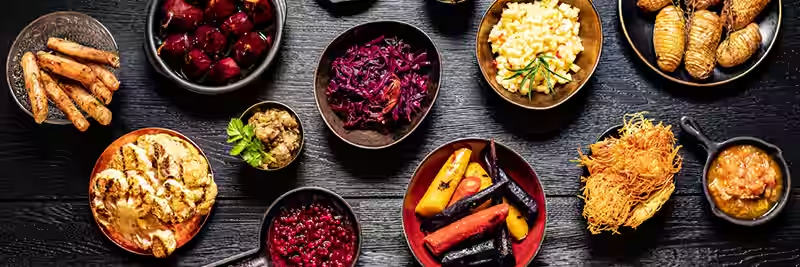
Here are some easy, reliable things to put with roast leg of lamb so the plate feels complete — a mix of comforting, fresh, and something with a bit of crunch.
- Roast potatoes
Crispy outside, soft inside. They soak up the lamb juices and make it feel like a proper roast. - Yorkshire puddings – see the best Yorkshire Pudding Recipe
Light, golden and crispy. Crowd pleaser that soaks up the lamb juices and gravy. - Steamed greens (broccoli, green beans, or spring greens)
Fresh and plain. They cut through the richness and keep the plate feeling light. - Glazed carrots or honey roasted parsnips
A little sweetness works well with the savoury lamb and adds colour to the plate. - Peas with butter and a squeeze of lemon
Soft, bright, and easy. Good when everything else is quite rich. - Green salad with a sharp dressing
Cool and crunchy. Gives you a break from hot, soft food. - Roasted asparagus or courgettes
Light, slightly charred veg to balance the heavier parts of the meal. - Mint sauce – its so easy to make your own incredible real mint sauce.
Just a spoon on the side lifts each bite and keeps things from feeling heavy.
Lazy option:
- Bag of mixed salad + shop-bought dressing. It still adds freshness with almost no work.
Impress people option:
- Dauphinoise Potatoes – thinly sliced potatoes baked in cream and garlic. Comforting, rich, and feels like you made an effort.
Drinks to Pair with Roast Leg of Lamb

This dish is rich, savoury, and herby, so it works best with drinks that are bold enough to keep up but still fresh. Some of the best examples come from France, Spain, and Italy.
Wine
- Red Bordeaux
Firm and dry enough to stand up to the lamb without getting in the way of the herbs. - Rioja
Smooth, comforting, and easy to drink with a roast. - Chianti
Bright and lively, which stops the meal from feeling heavy. - Côtes du Rhône
Warm and rounded, good with garlic and rosemary flavours.
What to avoid:
Very sweet wines or very light reds — they get lost next to the lamb.
This dish is rich and filling, so it works best with beers that are clean, steady, and not too heavy. Some of the best examples come from United Kingdom and Germany.
Beer
- Amber ale
Smooth and comforting, easy to sip alongside a roast dinner. - Brown ale
Slightly richer without being heavy, good with roasted flavours. - Helles lager
Clean and refreshing, helps reset your mouth between bites.
What to avoid:
Very bitter beers or very fizzy ones — they clash with the warmth of the meal.
This dish is rich and warming, so it works best with soft, refreshing drinks that don’t shout over the food. Some of the best styles are common in United Kingdom and Spain.
Non-alcoholic
- Cloudy apple juice with sparkling water
Fresh and lightly sweet, cuts through the richness nicely. - Lemon and mint water
Clean and cooling, good with garlic and herbs. - Alcohol-free cider
Feels grown-up and works well with roast flavours.
What to avoid:
Very sweet fizzy drinks — they make the meal feel heavy and cloying.
Presentation & Dinner Party Tips for Roast Leg Of Lamb
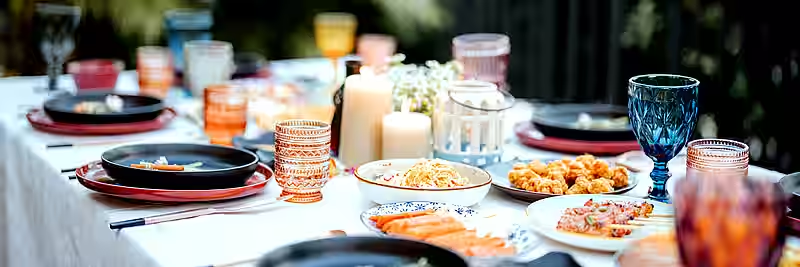
Here’s how to make roast leg of lamb feel like a proper occasion without tying yourself in knots. Nothing fancy, just a few calm moves that make hosting easier and the table feel looked-after.
Simple plating tips
- Slice the lamb on a board, then move it to a warm serving plate. It looks generous and stops the table getting messy.
- Spoon a little of the tray juices over the meat just before it goes out. Shine = instant upgrade.
- Keep sides in simple bowls people can pass around. It feels relaxed and stops you juggling plates.
Make-ahead tips
- Prep the leg of lamb earlier in the day: garlic in, herbs in, oil and seasoning on. Cover and keep in the fridge, then bring it out about an hour before cooking.
- Chop veg and get trays ready in advance so you’re not doing knife work when guests arrive.
- Make any sauces or dressings ahead and keep them in the fridge.
Timing advice
- Aim to have the lamb resting when guests arrive. It takes the pressure off and gives you breathing room.
- Use the resting time to finish sides, warm plates, and pour drinks.
- If things run late, the lamb can sit loosely covered in foil somewhere warm without any drama.
Easy wins to make it look impressive
- Finish with a handful of fresh herbs scattered over the sliced lamb and a few lemon wedges on the platter. It takes 10 seconds and makes the whole thing look intentional and generous.
or
- Pro move: Mix 1 tsp sea salt flakes with chopped rosemary. Sprinkle over sliced lamb just before serving.
Techniques & Principles Behind a Perfect Roast
Key techniques
Salting ahead of time (the day before if you can)
Salting the leg of lamb well in advance gives the salt time to move into the meat. It seasons more evenly and helps the surface dry a little, which leads to better browning in the oven.
High heat first, then lower heat
Starting hot gets colour on the outside. Turning the oven down lets the inside cook through more gently so the outside doesn’t burn before the middle is ready.
Letting the leg of lamb warm up before roasting
Taking the chill off helps the meat cook more evenly. A very cold joint in a hot oven tends to overcook on the outside before the centre catches up.
Resting after roasting
Resting lets the meat relax and the juices settle back into it. If you cut straight away, more liquid runs out and the slices can seem drier.
Adding a little liquid to the tray
A splash of water or stock helps stop the tray from burning and gives you something to spoon over the meat at the end.
Why they matter
Better browning without burning
Drying and salting the surface helps the outside brown properly instead of steaming. The hot-then-lower oven approach spreads the cooking more evenly from edge to centre.
Juicier slices on the plate
Resting reduces the amount of juice lost when you cut into the lamb, so the meat tastes softer and fuller.
More forgiving timing
Gentler heat after the initial blast gives you a wider window where the lamb is good to eat, instead of a very narrow “perfect” moment.
Nicer tray juices
Liquid in the tray dissolves the tasty bits that stick during roasting, which gives you better drippings to spoon over the meat.
When to break the rules
You forgot to salt ahead
No problem. Season well just before roasting and use plenty of tray juices when serving. The lamb will still be good.
You don’t want pink lamb
Skip the high-heat finish at the end and cook longer at the lower temperature. The meat will be more cooked through and easier to slice for people who prefer it that way.
You’re short on time
You can roast the leg of lamb at one steady temperature the whole way through. You’ll lose a bit of colour on the outside, but the flavour will still be there.
You’re cooking for different tastes
Roast the lamb to pink, then slice part of it and put those slices back in the oven for a few minutes for anyone who wants theirs more cooked.
You’re making it ahead
Roast earlier, rest, then reheat gently with some tray juices spooned over. It won’t be quite as perfect as straight from the oven, but it’s far better than stressed cooking at the last minute.
Final Notes
Follow this companion and you’ll have a roast leg of lamb that tastes great, looks good on the table, and feels effortless. Keep it generous, calm, and warm — that’s what people remember most. Use as much or as little as you need, from a casual dinner to a full dinner party, and enjoy the process as much as the meal.