
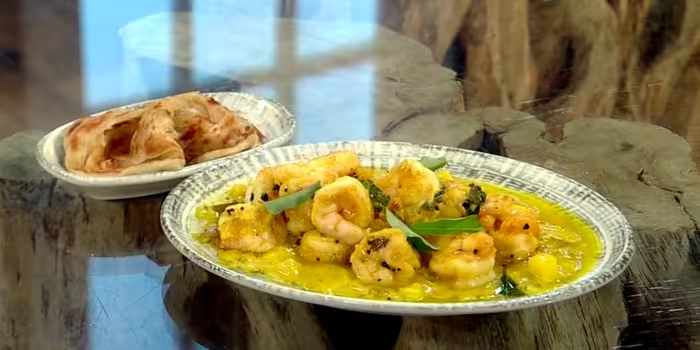
Vivek Singh’s Udipi prawns with Malabar porotta recipe – a fragrant South Indian‑inspired main course featuring tender prawns tossed in a deeply savoury onion and spice reduction, served in a silky coconut and fresh pineapple sauce. Homemade flaky Malabar porotta offers buttery, layered perfection ideal for scooping up every drop.
 Original recipe by Vivek Singh
From Saturday Kitchen 07 Nov 2026
Optimised by our culinary team – featuring a Nutri-Score B, 6 possible customisations, and a 4-stage timed method.
 Prawns provide lean, high‑quality protein; pineapple and coconut milk add vitamins and beneficial fats. Moderate refined flour and ghee keep this from an A rating. A balanced, nourishing main course suitable for all the family.
Shop the Recipe
The kit that makes this recipe easy:
- Heavy‑based frying pan – a must for slow, even onion caramelisation without burning
- Cast‑iron griddle – ideal for cooking porotta to golden perfection and holding steady heat
- Pestle and mortar – great for releasing fresh ginger and chilli oils for maximum flavour
- Food processor – perfect for blitzing the sauce to a luxuriously smooth consistency



Ingredients
For the Malabar porotta
- 500g/1lb 2oz plain flour
- 15g/½oz caster sugar
- 2 free‑range eggs
- 80ml/2½fl oz milk
- 50g/1¾oz vegetable oil
- plain flour, for dusting
- 30g/1oz ghee, melted
- pinch of salt
- about 100ml/3½fl oz water, to bind
For the onion reduction
- 2 white onions, finely chopped
- 3 tbsp vegetable oil
- ½ tsp mustard seeds
- 20 fresh curry leaves
- 2 green chillies, chopped
- 2.5cm/1in piece fresh ginger
- ½ tsp ground turmeric
- pinch of salt
- few black peppercorns
For the sauce
- 3 tbsp vegetable oil
- 1 tsp fennel seeds
- 2 garlic cloves, finely chopped
- 2 green chillies, finely chopped
- 2.5cm/1in piece fresh ginger, cut into thin strips
- 8–10 fresh curry leaves
- ½ tsp ground turmeric
- 1 white onion, sliced
- ¼ pineapple, peeled, cored and cut into 1.25cm/½in pieces
- 200ml/7fl oz coconut milk
- salt and pepper, to taste
For the stir‑fried prawns
- 2 tbsp vegetable oil
- 500g/1lb 2oz raw prawns, peeled
- 8 fresh curry leaves
- ½ tsp sugar
- ½ lime, juice only
- salt, to taste
Customise
- Prawns – use sustainable cold‑water prawns for best ethics and flavour; large king prawns work beautifully too
- Porotta shortcut – buy ready‑made Malabar paratha from Indian grocers to cut prep time by 45 minutes
- Ghee swap – use melted butter or coconut oil if ghee is hard to find; authentic ghee gives best nutty flavour
- Heat level – deseed chillies or reduce quantity for milder taste; keep seeds in for authentic fire
- Pineapple – use fresh for brightest flavour; tinned pineapple works – drain well and reduce simmer time slightly
- Gluten‑free – swap plain flour for GF bread flour blend; add 1 tsp xanthan gum if not included
How the timings work
- Make the porotta dough first – it needs two rest periods; use the gaps to prep onions, ginger, chillies and pineapple
- Simmer the onion reduction low and slow – 20–30 minutes undisturbed; it develops deep sweetness and can be made a day ahead
- Cook the sauce while the onion reduction finishes – they run in parallel; sauce keeps warm easily
- Griddle porottas while the sauce simmers – each takes 6–8 minutes; stack wrapped in foil to stay soft
- Stir‑fry prawns last – just 3–4 minutes; serve immediately so they stay tender and juicy
Method
Make the porotta dough & rest (20 mins + 45 mins resting)
- Mix the base – whisk 2 eggs, pinch of salt, 15g sugar, 80ml milk and 100ml water in a jug. Sift 500g flour into a large bowl. Gradually pour in the liquid, stirring, then knead to a soft, smooth dough.
- Add fat – work in 50g vegetable oil until fully incorporated. Dough should be soft and pliable, not sticky. Cover and rest for 30 minutes.
- Divide and rest again – split into 8 equal balls. Brush tops with melted ghee, cover, rest 10 minutes more. Resting makes stretching easy – don’t skip it.
- Stretch thin – lightly oil work surface. Roll then stretch each ball into a paper‑thin sheet – almost transparent. Use palms to pull gently from centre outwards.
- Fold and spiral – brush sheet with ghee, dust lightly with flour. Fold into a long concertina strip, then roll into a tight spiral. Rest 5 minutes.
- Cook and flake – flatten spiral to 20cm/8in disc. Cook on a griddle over medium–low heat 3–4 minutes each side, brushing with ghee. Crush gently between palms to separate layers. Set aside covered.
Make the onion reduction (30 mins)
- Crush aromatics – pound ginger and 2 green chillies in a pestle and mortar to a coarse paste.
- Fry seeds and leaves – heat 3 tbsp oil in a heavy‑based pan over medium heat. Add ½ tsp mustard seeds and 20 curry leaves. When they crackle, add 2 finely chopped onions.
- Slow‑cook – stir in the ginger‑chilli paste and salt. Turn heat low. Cook 20–30 minutes, stirring occasionally, until onions melt down to a deep golden, sticky reduction.
- Finish spices – stir in ½ tsp turmeric and peppercorns. Cook 2 minutes more. Set aside.
Make the coconut pineapple sauce (20 mins)
- Build flavour base – heat 3 tbsp oil in a saucepan over medium heat. Add 1 tsp fennel seeds, fry 30 seconds until fragrant. Add garlic, 2 chillies, ginger strips and 8–10 curry leaves. Fry 1 minute.
- Soften and sweeten – stir in ½ tsp turmeric, 1 sliced onion and pinch of salt. Cook 3–4 minutes until onion softens. Add ¼ pineapple cut into 1.25cm pieces. Cook 2 minutes.
- Simmer and blend – pour in 200ml coconut milk. Gently simmer 10 minutes until pineapple tender. Cool slightly, transfer to a food processor. Blitz until perfectly smooth. Season, keep warm.
Stir‑fry prawns & serve (10 mins)
- Quick fry – heat 2 tbsp oil in a frying pan over medium–high heat. Add 500g peeled prawns and 8 curry leaves. Season lightly. Stir‑fry 2 minutes until prawns start to turn pink.
- Combine and finish – add the reserved onion reduction. Toss and cook 1–2 minutes more until prawns are fully pink, opaque and just cooked through – do not overcook.
- Brighten – sprinkle over ½ tsp sugar, squeeze in the juice of ½ lime. Toss once, then take off heat immediately.
- Plate up – spoon warm coconut and pineapple sauce onto plates. Top with the spiced prawns. Serve alongside the flaky Malabar porotta.
Techniques for Success
- Stretch dough thin – and rest properly – rushed dough tears; rested dough stretches like silk. If it resists, rest 5 more minutes. Success: paper‑thin, almost transparent sheets that form delicate flaky layers. Failure: thick, tough, doughy porotta that won’t separate.
- Caramelise onions low and slow – this is the flavour heart. Rushing gives sharp, bitter onion; patience gives deep, sweet savoury richness. Stir only as needed. Success: deep golden, sticky reduction that clings to prawns. Failure: pale, watery or burnt onion base.
- Don’t overcook prawns – 3–4 minutes total is plenty. They continue cooking off heat. Remove when just opaque and still plump. Success: juicy, tender, sweet prawns. Failure: rubbery, shrunk, dry prawns.
| Technique | Failure if done wrong | Success looks like |
|---|---|---|
| Porotta dough & stretching | Tough, thick, won’t layer | Paper‑thin sheet, golden flaky layers pull apart easily |
| Onion reduction | Sharp, watery, pale or burnt | Deep golden, sticky, intensely sweet‑savoury |
| Prawn cooking time | Rubbery, shrunk, dry | Plump, juicy, pink and opaque throughout |
Tips & Swaps
- Get ahead: Make porotta dough and onion reduction up to 2 days ahead – store covered in fridge. Bring dough to room temperature before rolling. Cook porottas fresh for best texture.
- Shortcuts: Buy frozen ready‑made Malabar paratha to skip dough and resting – cook from frozen on griddle. Use tinned pineapple, drained well, to cut prep time.
- Dietary notes: Naturally pregnancy‑friendly – all ingredients fully cooked. Use pasteurised eggs if preferred. Vegetarian? Swap prawns for paneer cubes or cauliflower florets and adjust cooking times.
- Leftovers: Prawns and sauce keep well for 2 days covered in fridge – reheat gently on hob. Porotta is best fresh but can be reheated wrapped in foil in a warm oven or dry pan.
- Serving ideas: Complete meal with steamed basmati rice or extra porottas. Add a simple cucumber and onion salad with lime juice to cut through richness.
- Flavour boost: Toast fennel seeds lightly before adding to the sauce for deeper, nuttier aroma. Taste and balance – add a pinch more sugar if pineapple is tart, extra lime if sauce feels heavy.
Wine Pairing
Recommended by Helen McGinn:
The Best Douro Godelho, Portugal – Morrisons, £9.50
This bright, zesty white from Portugal’s Douro Valley offers refreshing citrus and tropical fruit notes that match the pineapple and coconut beautifully. Its clean acidity cuts through richness while subtle floral aromas complement the curry leaves and fennel seed – a vibrant, food‑friendly choice.
Equally good alternatives that pair beautifully with this dish:
Vinho Verde, Portugal — Aldi / Lidl, £5.99
Crisp, light and gently spritzy with lime and green apple notes – zingy acidity cuts through richness and mirrors the fresh lime and ginger brightness. Deliciously easy‑drinking.
Chenin Blanc, Loire Valley, France — Tesco / Sainsbury’s, £8.99
Off‑dry with delicate pear and honeyed floral notes – gentle sweetness balances coconut milk creaminess and tames chilli heat, while bright acidity keeps every mouthful fresh and lively.
Grüner Veltliner, Austria — Waitrose / Marks & Spencer, £11.99
Refined and aromatic with white pepper, lime zest and white peach – bright mineral‑driven flavour lifts every spice and sauce layer with elegance; the perfect match for this complex, fragrant dish.
* Prices checked November 2026 and may vary. The alternatives are our suggestions, not necessarily wines recommended by Helen McGinn.
Recipes from this episode
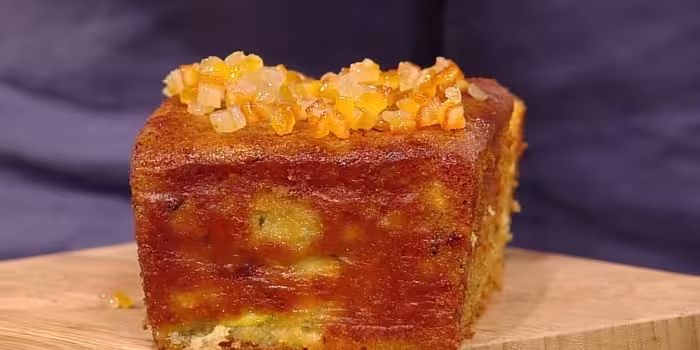
Courgette and lemon cake with basil
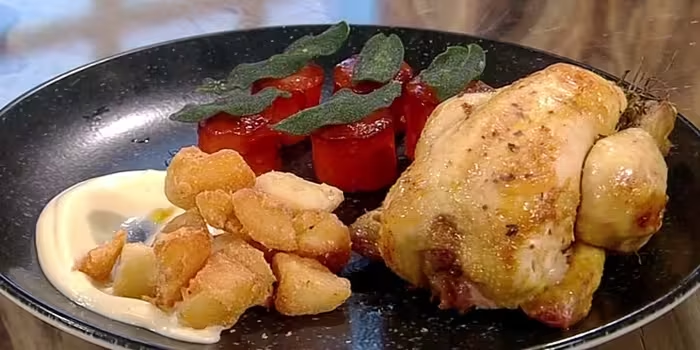
Roast poussin with sage butter carrots, cauliflower cheese purée and crispy duck fat potatoes
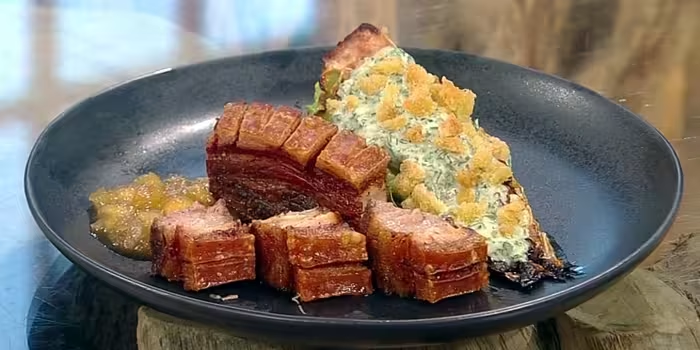
Crisp pork belly with buttermilk cabbage and croutons
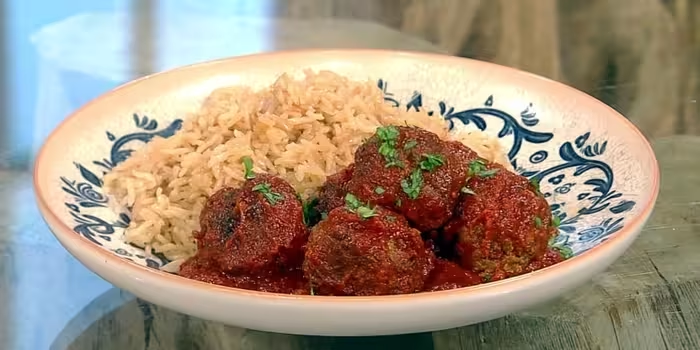
Mexican meatballs with arroz blanco
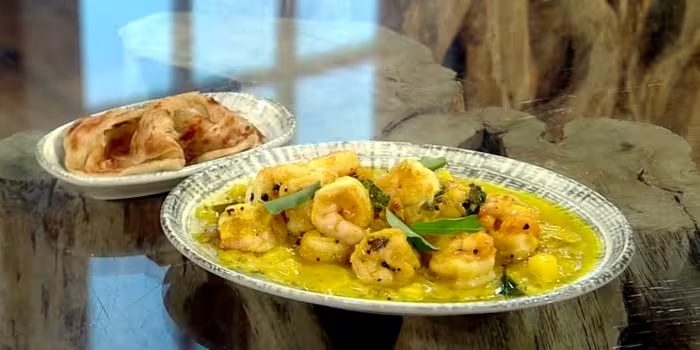
Udipi prawns with Malabar porotta
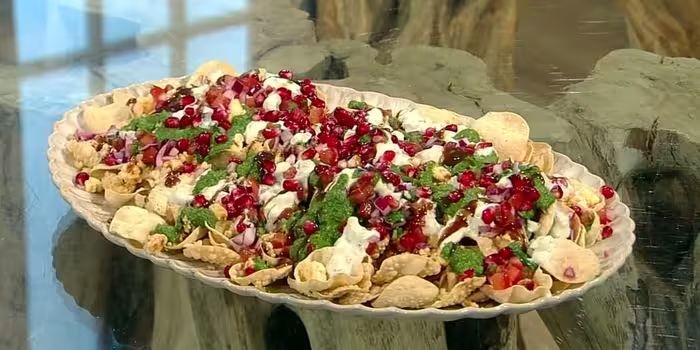
Nachodums with homemade paneer